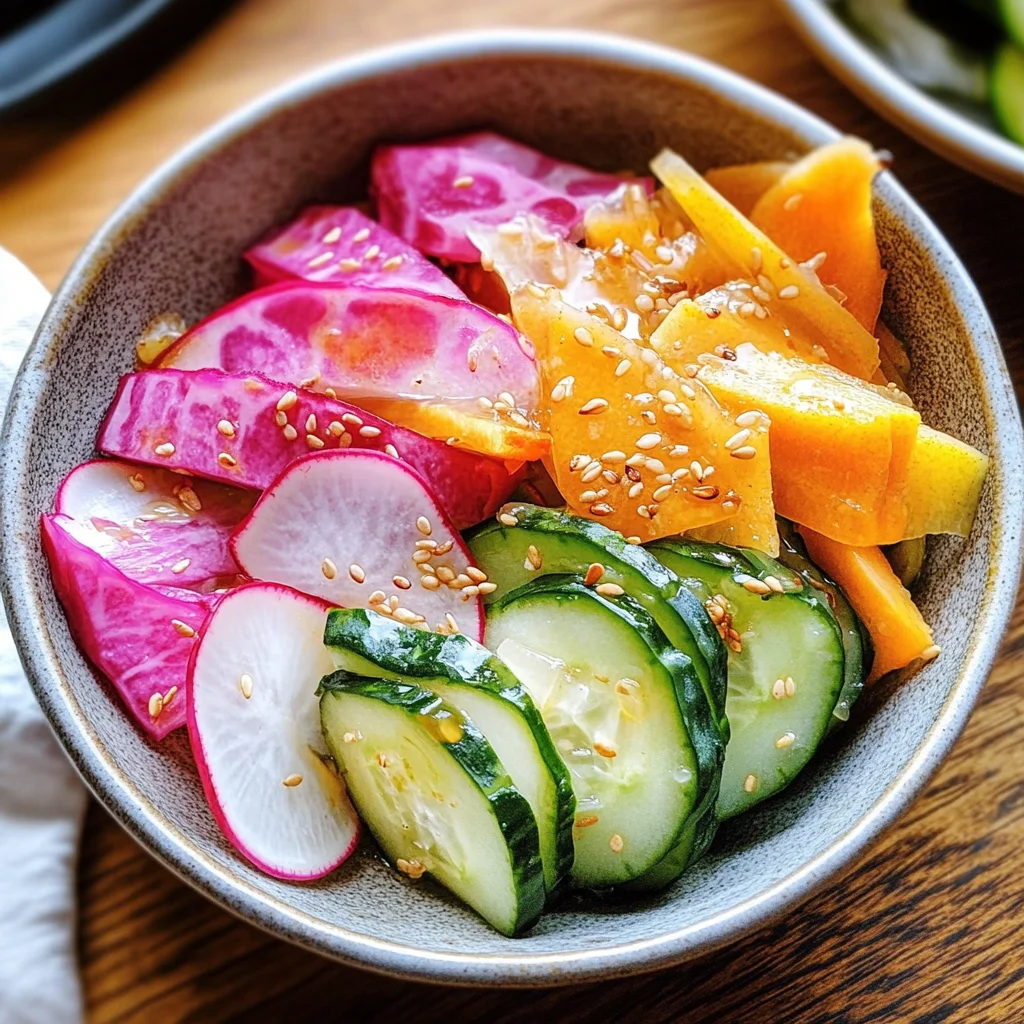
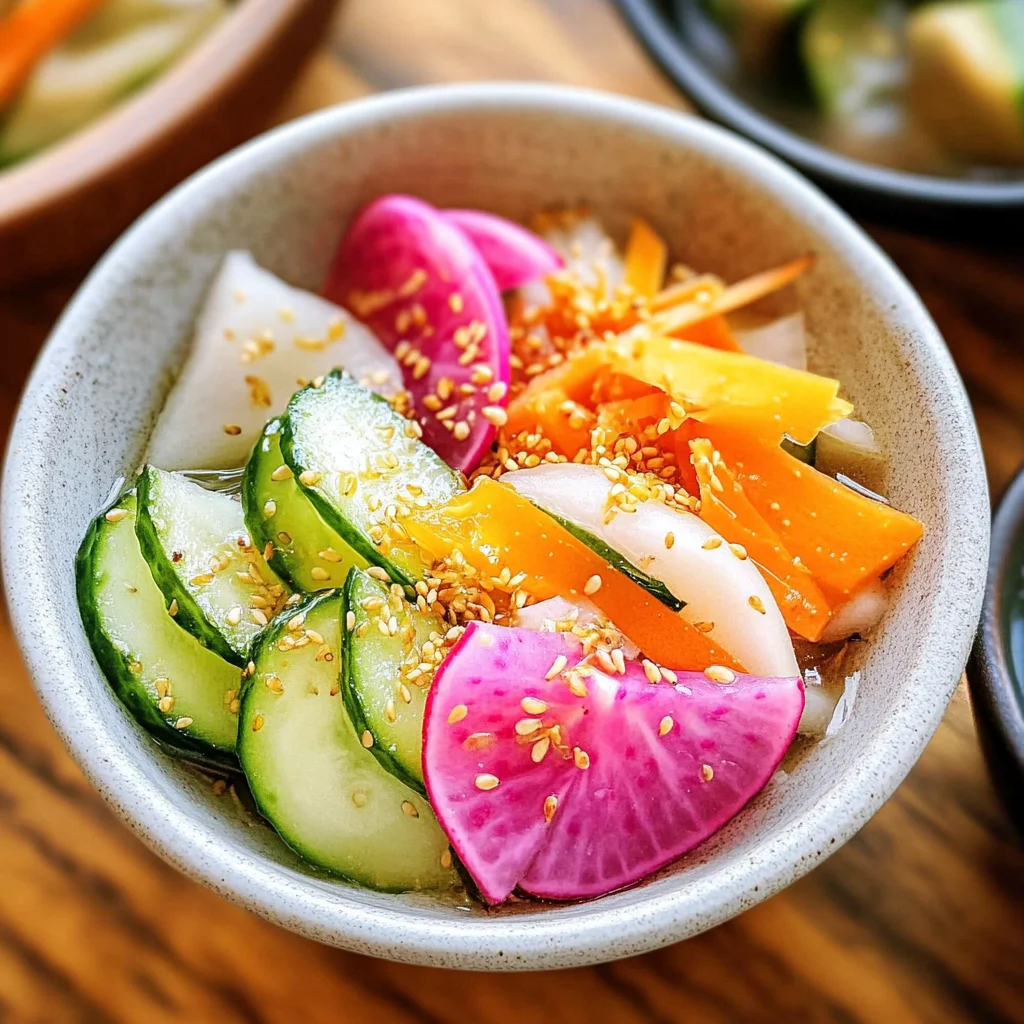
Colorful and crunchy, Asazuke (Japanese Lightly Pickled Vegetables) are a delightful addition to any meal. These quick pickles are not only easy to prepare but also add a refreshing burst of flavor to your dishes. Perfect for lunch boxes or as a side at dinner, they elevate everyday meals with their unique taste. With a minimal pickling time of just one hour, you can enjoy vibrant, zesty vegetables ready to complement any cuisine.
Why You’ll Love This Recipe
- Quick Preparation: This recipe takes only 15 minutes of active time and requires minimal cooking skills.
- Versatile Flavor: Customize your Asazuke by adding your favorite vegetables or herbs, making it suitable for various palate preferences.
- Healthy Side Dish: Low in calories and packed with nutrients, these pickles are a guilt-free addition to any meal.
- Crispy Texture: The combination of fresh vegetables ensures a satisfying crunch in every bite.
- Culinary Adventure: Experience the authentic taste of Japanese cuisine right in your kitchen.
Tools and Preparation
Before you start making your Asazuke, gather the necessary tools to ensure a smooth cooking experience.
Essential Tools and Equipment
- Large bowl
- Digital kitchen scale
- Knife
- Cutting board
Importance of Each Tool
- Large bowl: Essential for mixing ingredients and allowing the vegetables to marinate effectively.
- Digital kitchen scale: Helps accurately measure ingredients for consistent results every time.
Ingredients
For the Vegetables
- 4 leaves napa cabbage ((11 oz, 300 g; or use green cabbage))
- 2 inches daikon radish ((6 oz, 170 g; or use turnips or cauliflower))
- 1 Japanese or Persian cucumber ((4.5 oz, 128 g))
- ½ watermelon radish ((3.5 oz, 100 g; or use red radish))
- ⅓ carrot ((1.6 oz, 45 g))
For the Pickling Mixture
- Diamond Crystal kosher salt
- ½ tsp sugar
- 1 piece kombu (dried kelp) ((1 x 2 inches or 2.5 x 5 cm per piece))
Optional Enhancements
- 5 shiso leaves (perilla/ooba) ((optional, but it‘s best to include))
- Toasted sesame oil ((for drizzling))
- Toasted white sesame seeds ((for sprinkling))
- Yuzu zest ((optional))
How to Make Asazuke (Japanese Lightly Pickled Vegetables)
Step 1: Prepare Your Ingredients
Gather all your ingredients and chop the vegetables into bite-sized pieces. Weigh the empty large bowl using a digital kitchen scale so that you can measure out the correct amount of each vegetable later.
Step 2: Mix the Pickling Solution
In the large bowl, combine Diamond Crystal kosher salt and sugar. Add in the kombu piece. Stir well until everything is evenly mixed.
Step 3: Add Vegetables
Add your chopped vegetables into the bowl with the pickling mixture. Toss everything together until all pieces are thoroughly coated with the salt-sugar blend.
Step 4: Marinate
Cover the bowl with plastic wrap or a lid. Let it sit at room temperature for at least 1 hour or up to overnight in the refrigerator for deeper flavor.
Step 5: Serve
Once marinated, serve your Asazuke garnished with toasted sesame oil, sesame seeds, and yuzu zest if desired. Enjoy these delightful Japanese lightly pickled vegetables as a refreshing side dish!
How to Serve Asazuke (Japanese Lightly Pickled Vegetables)
Asazuke is a delightful addition to any meal, bringing a burst of flavor and crunch. These Japanese lightly pickled vegetables can be served in various ways to enhance your dining experience.
As a Side Dish
- Pair Asazuke with grilled chicken or beef for a refreshing contrast.
- Serve alongside rice dishes to add texture and flavor.
In a Salad
- Toss Asazuke into mixed greens for added crunch and color.
- Use as a topping on grain salads for extra zest.
With Sushi
- Serve Asazuke as a palate cleanser between sushi bites.
- Include it on a sushi platter for vibrant presentation.
In Bento Boxes
- Pack Asazuke in bento boxes for a colorful and healthy lunch option.
- Combine with other pickled items for variety.
How to Perfect Asazuke (Japanese Lightly Pickled Vegetables)
Creating the perfect Asazuke involves attention to detail. Follow these tips to elevate your pickling game.
- Choose Fresh Vegetables: Select crisp, fresh vegetables for the best texture and flavor.
- Adjust Salt Levels: Taste the saltiness after an hour and adjust according to your preference.
- Experiment with Ingredients: Feel free to try different veggies like zucchini or peppers for unique flavors.
- Use Quality Kombu: High-quality kombu adds depth of flavor; consider sourcing from specialty stores.
- Let It Rest Longer: For deeper flavors, allow it to pickle overnight before serving.
Best Side Dishes for Asazuke (Japanese Lightly Pickled Vegetables)
Asazuke pairs wonderfully with a variety of side dishes, adding balance and excitement to your meal. Here are some great options:
- Miso Soup: A warm miso soup complements the cold crunch of Asazuke perfectly.
- Steamed Rice: Plain steamed rice serves as a neutral base that highlights the flavors of the pickles.
- Grilled Fish: The lightness of grilled fish balances well with the tangy notes of the pickles.
- Tempura Vegetables: Crispy tempura offers contrasting textures that enhance your dining experience.
- Noodle Salad: A cold noodle salad dressed in sesame provides a delightful pairing with Asazuke.
- Edamame Beans: Lightly salted edamame adds protein and texture, making it a great companion.
Common Mistakes to Avoid
To ensure your Asazuke (Japanese Lightly Pickled Vegetables) turns out perfectly, here are some common mistakes to watch for.
- Using the wrong vegetables: Choose fresh, crunchy vegetables like napa cabbage and daikon radish. Substituting with mushy vegetables will affect texture.
- Skipping the salt: Salt is crucial for drawing moisture from the vegetables. Without it, your pickles may be bland and watery.
- Not allowing enough pickling time: One hour is the minimum for proper flavor infusion. Be patient and let the flavors develop for a better taste experience.
- Ignoring temperature: Keep your pickles at room temperature during the initial pickling phase. Chilling them too soon can prevent proper fermentation.
- Neglecting to weigh ingredients: Accurate measurements ensure balanced flavors. Use a kitchen scale to weigh your vegetables before mixing.
Storage & Reheating Instructions
Refrigerator Storage
- Store in an airtight container for up to 1 week.
- Keep in the coldest part of your refrigerator.
Freezing Asazuke (Japanese Lightly Pickled Vegetables)
- Freezing is not recommended as it can alter texture and flavor.
- If necessary, use freezer-safe bags, but consume within a month for best quality.
Reheating Asazuke (Japanese Lightly Pickled Vegetables)
- Oven: Preheat to a low setting and warm gently, but not recommended as they are best served cold or at room temperature.
- Microwave: Heat briefly on low power if desired; however, this could soften their crunchiness.
- Stovetop: Quickly sauté on low heat with a little oil if you prefer warm pickles, but avoid overcooking.
Frequently Asked Questions
Here are some common questions about Asazuke (Japanese Lightly Pickled Vegetables) that might help you along your culinary journey.
What vegetables work best for Asazuke?
Fresh, crunchy vegetables such as napa cabbage, daikon radish, and cucumbers are ideal. Feel free to experiment with other crisp veggies!
How long should I wait before eating Asazuke?
For optimal flavor, allow at least 1 hour of pickling time. You can refrigerate them overnight for even more enhanced taste.
Can I customize my Asazuke?
Absolutely! Add shiso leaves, yuzu zest, or sesame oil for unique flavors. The recipe is versatile—play around with different vegetables and seasonings!
What can I serve with Asazuke?
Asazuke pairs well with rice dishes, grilled meats, or even as part of a sushi platter. They make a refreshing side that complements many meals.
Final Thoughts
Asazuke (Japanese Lightly Pickled Vegetables) offers an easy way to enjoy fresh produce with delightful crunch and vibrant flavors. This recipe’s versatility allows you to customize it based on your preferences and available ingredients. Try making your own batch today!
Asazuke (Japanese Lightly Pickled Vegetables)
- Total Time: 15 minutes
- Yield: Serves approximately 4 people 1x
Description
Asazuke, or Japanese Lightly Pickled Vegetables, is a vibrant and refreshing side dish that enhances any meal with its colorful crunch and zesty flavor. Made from a variety of fresh vegetables, this quick pickle recipe requires minimal active preparation time and offers a delightful burst of taste in just one hour. Perfect for lunch boxes, dinner sides, or as a unique addition to sushi platters, Asazuke is not only healthy but also incredibly versatile—customize it with your favorite veggies and herbs. Enjoy the authentic taste of Japanese cuisine right in your kitchen!
Ingredients
- 4 leaves napa cabbage
- 2 inches daikon radish
- 1 Japanese cucumber
- ½ watermelon radish
- ⅓ carrot
- Diamond Crystal kosher salt
- ½ tsp sugar
- 1 piece kombu (dried kelp)
Instructions
- Chop the vegetables into bite-sized pieces and place them in a large bowl.
- In that bowl, combine kosher salt and sugar, then add the kombu. Mix until well combined.
- Toss the chopped vegetables in the pickling mixture until evenly coated.
- Cover with plastic wrap or a lid and let marinate at room temperature for at least 1 hour or refrigerate overnight for deeper flavor.
- Serve garnished with optional sesame oil, sesame seeds, and yuzu zest.
- Prep Time: 15 minutes
- Cook Time: 0 minutes
- Category: Side Dish
- Method: Pickling
- Cuisine: Japanese
Nutrition
- Serving Size: 1 cup (150g)
- Calories: 35
- Sugar: 3g
- Sodium: 500mg
- Fat: 0g
- Saturated Fat: 0g
- Unsaturated Fat: 0g
- Trans Fat: 0g
- Carbohydrates: 8g
- Fiber: 2g
- Protein: 1g
- Cholesterol: 0mg


Leave a Comment